
By Nick, Cullompton Carpenters ·
The week between tenancies is short, and it is the best chance you get to fix things without working around someone's life. A clear list helps, because the small things left now become the repair calls of the next year. This is the list we work through on void visits.
The legal checks come first
Some checks are required by law in private rented homes in England, and they need to be booked early because they rely on other trades:
- Smoke alarms: there must be a working smoke alarm on every storey used as living accommodation.
- Carbon monoxide alarms: required in any room used as living accommodation with a fixed combustion appliance, such as a gas boiler or wood burner. Gas cookers are excluded.
- Alarms must be checked as working on the first day of each new tenancy.
- A gas safety check by a Gas Safe registered engineer every year, where there are gas appliances.
- An electrical installation condition report (EICR) at least every five years.
If the property is a house in multiple occupation, the licence conditions add more, especially fire doors. Our guide to fire doors in rental properties covers what inspectors look for. In Exeter, converting a house into an HMO inside the Article 4 area also needs planning permission, so check that before any work is planned.
Doors and windows
- Every internal door opens, closes and latches without rubbing. Our guide to fixing a sticking door explains the usual causes.
- Fire doors, where fitted, still have their closers, seals and even gaps.
- External doors lock properly, and the keys you hand over all work.
- Window restrictors on upper floors work, and handles and locks are not broken.
Kitchen
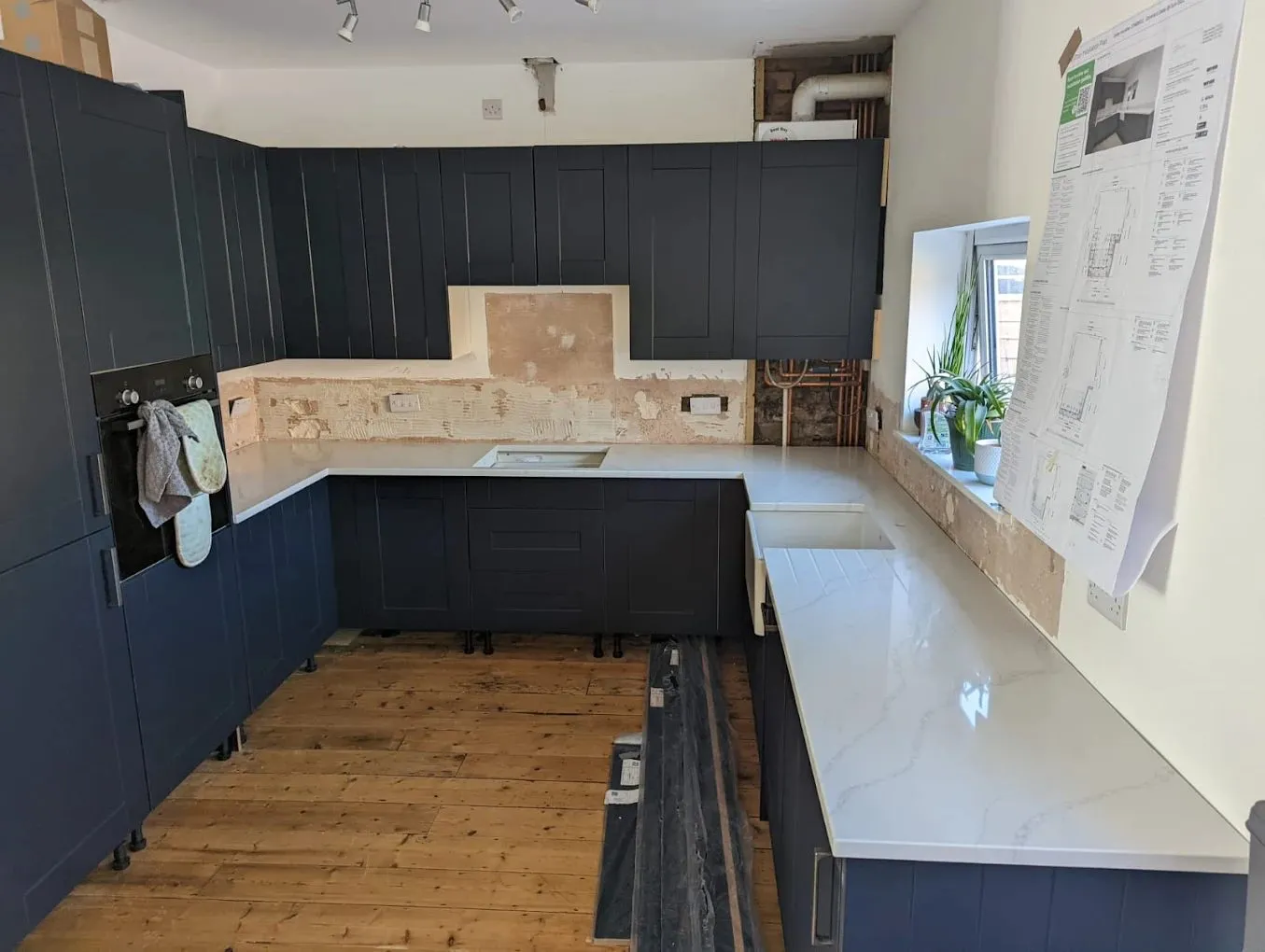
Kitchens take the hardest wear in a let. Look for swollen worktop edges round the sink, which mean the seal has failed and water is getting into the chipboard. Check hinges and drawer runners, the silicone behind the sink, and under the sink for slow leaks. A door or worktop can often be replaced on its own, but where the units themselves have gone, a hard wearing replacement kitchen saves money over the next few tenancies. See our kitchen fitting page for what that involves.
Bathroom
- Silicone round the bath and shower is intact and free of black mould. Old silicone should be cut out and replaced, not covered over.
- The extractor fan runs and actually pulls air. Many damp complaints start with a fan that has failed or been switched off.
- Taps, toilet flush and shower all work, with no drips or running cistern.
- The floor near the toilet and bath is firm. A soft floor means a long term leak.
Damp and mould
Damp and mould are now taken very seriously in rented homes. Between tenancies, look behind furniture, in wardrobes on outside walls and around window reveals. Fix the cause where you can: a failed fan, a leaking gutter, a blocked air brick or a gap where water is getting in. Then treat and redecorate. Painting over mould without fixing the cause only buys a few weeks.
Outside
Check gutters, fascias and any timber that is rotting, and look at fences and gates. A broken side gate is a security problem as well as a repair. In Tiverton and Honiton, plenty of rental terraces have rear lane access where the gate and back fence are the only security for the garden.
Make one list, book one visit
We carry out void repairs and regular property care for landlords and holiday let owners as part of our small building work and property care service, along with carpentry and plumbing and electrical jobs. Send us the list and the dates the property is empty, and we will plan it so the work fits the gap. Contact us here.
Common questions
- Do I need a carbon monoxide alarm next to a gas cooker?
- No. Gas cookers are excluded. A CO alarm is required in rooms with a fixed combustion appliance such as a boiler, open fire or wood burner.
- How often does a rental need an electrical inspection?
- In England, private landlords need an electrical installation condition report at least every five years.
- Can you work while the property is being marketed?
- Yes. We can work around viewings and agree access with your letting agent.