
By Nick, Cullompton Carpenters ·
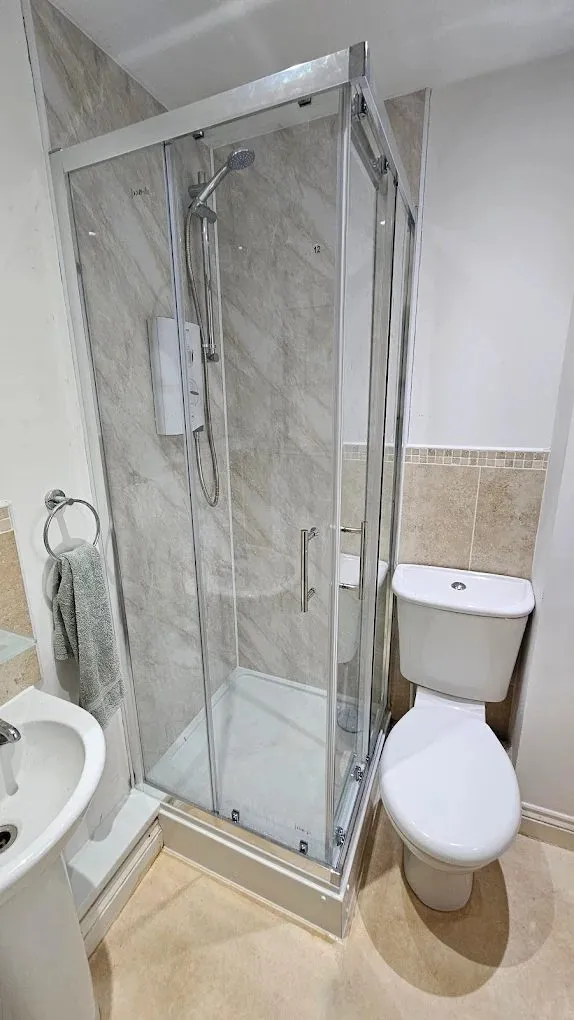
A burst pipe is obvious. The leaks that do the real damage in bathrooms are the slow ones: a failed seal round a shower tray or a weeping joint under the bath, letting a little water out every day for months. By the time it shows on the ceiling below, the floor may already be soft. Catching it early turns a big repair into a small one.
The early signs
- A floor that feels soft or bouncy near the toilet, bath or shower tray.
- Tiles that have lifted, cracked or sound hollow when tapped, or grout that keeps cracking in the same place.
- Silicone that has gone black, peeled away or has a gap behind it.
- A musty smell that does not clear even with the window open.
- Stains, bubbling paint or a damp patch on the ceiling below the bathroom.
- Skirting boards outside the bathroom that are swollen or stained.
- The water meter moving when nothing is running, which points to a leak on the supply side.
Finding the source
Water travels along joists and pipes before it shows, so the stain is often not directly under the leak. A few checks help narrow it down:
- Run the shower only, aimed at the tray and not the walls, then check below. If it leaks, the waste or tray seal is likely.
- Spray the walls and screen but not the tray. If that leaks, the problem is the silicone, grout or a gap round the enclosure.
- Fill the bath and let it drain. Leaks from the waste and overflow often only show when the bath is full.
- Check round the base of the toilet and the cistern connections with a dry tissue.
Why shower areas fail
Grout is not waterproof. Behind the tiles, the wall needs to be a water resistant board and properly tanked, so water that gets through the grout cannot reach the wall or floor. In older bathrooms tiles were often stuck straight onto plaster or plasterboard, which soaks up water and crumbles over time. A shower tray also needs to be fully supported on a solid, level base. A tray that flexes slightly every time someone stands in it will eventually break its seal.
Can it be patched?
If the leak is caught early and the floor is sound, the fix can be simple: new silicone, a new waste seal or a regrouted section. If the floorboards or chipboard have gone soft, they need cutting out and replacing, and the joists underneath checking. Where the tiles round a shower have failed because there was no tanking behind them, a patch rarely lasts, and it is usually better to strip that area and do it properly.
In Victorian terraces across Exeter and Wellington, bathrooms are often in a rear extension or over the kitchen, so a leak can affect the kitchen ceiling too. Older timber floors there may also have been notched for pipes many times over, so we check the joists while the floor is up.
Fixing it as part of a refit
If the bathroom is due for replacing anyway, a leak is a good reason to bring it forward. The refit gives the chance to fix the floor, board and tank the walls and get the tray properly bedded. Our guide to the order of a bathroom refit explains where each of these steps falls. Any changes to the wiring, such as a new extractor fan, are notifiable in a bathroom, which our Part P guide explains.
Getting it looked at
We repair leaks and rotten floors and carry out full refits through our bathroom fitting and plumbing and electrical services, with floor and joist repairs covered by our carpentry work. We are in Tiverton most weeks. Send us a message with a photo of the problem area and the ceiling below.
Common questions
- Why does my ceiling only stain when someone has a shower?
- That usually points to the shower waste, the tray seal or water getting through the silicone and grout round the enclosure.
- Is grout waterproof?
- No. Grout lets some water through, which is why the wall behind a shower should be a water resistant board and properly tanked.
- Can a soft bathroom floor be repaired without a full refit?
- Often, yes. The damaged section is cut out and replaced and the joists checked, but the toilet, bath or tray above may need lifting to reach it.