
By Nick, Cullompton Carpenters ·
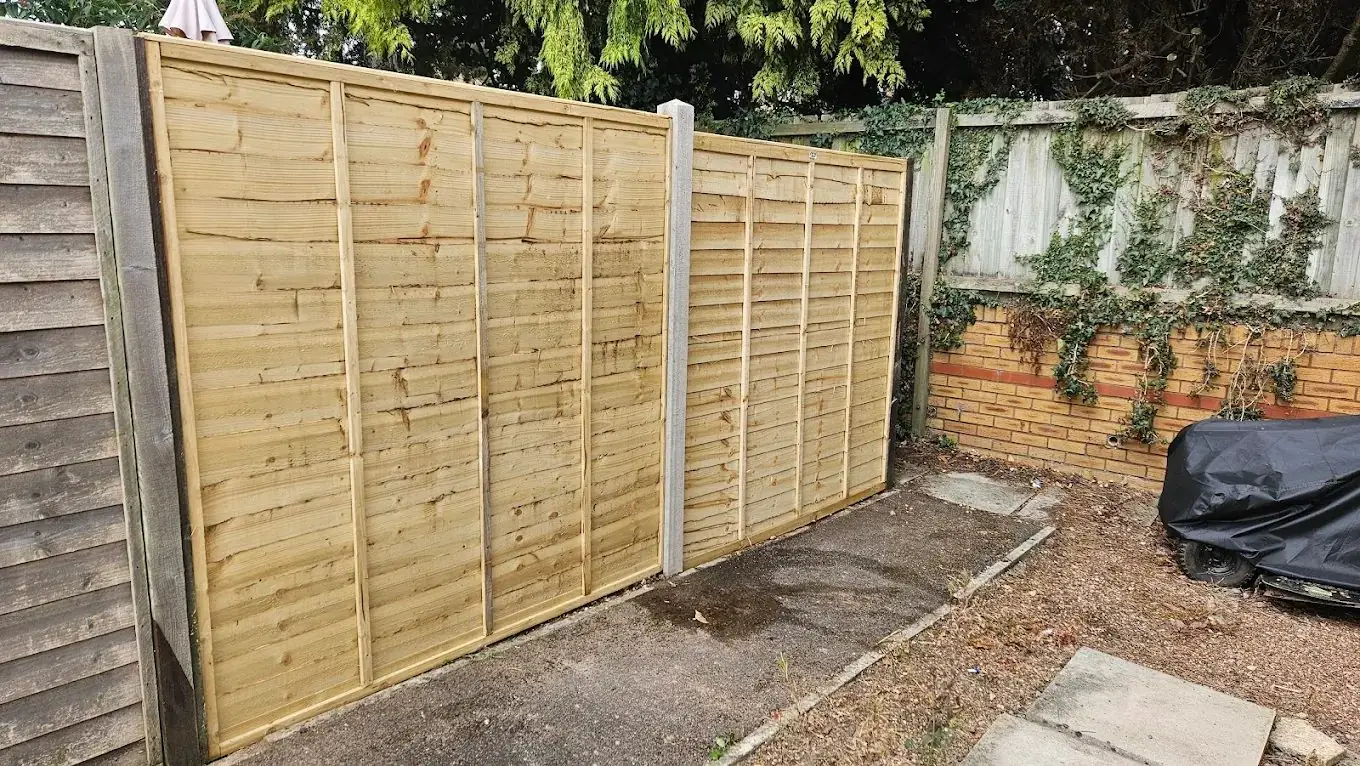
Every autumn the first big storms take down a few fences, and the first question is often whose job it is to fix them. The answer is not always obvious, and the common rules of thumb are not reliable. It is worth sorting out now, before a panel is lying across the lawn.
The left hand rule is a myth
A lot of people believe that each house owns the fence on its left, or that the side with the posts belongs to the owner. Neither is a legal rule. There is no fixed rule in England about who owns which boundary, and unless the deeds say otherwise there is no general obligation to have a fence at all.
Check the deeds for T marks
The best place to start is your title deeds. Older conveyances and some developers' plans show responsibility with T marks drawn on the boundary line:
- A T on your side of the line, pointing into your property, usually means that boundary is yours to maintain.
- T marks on both sides, which look like an H, usually mean the boundary is shared.
- No marks at all means the deeds are silent, and you may need to look at older documents or agree it with your neighbour.
The HM Land Registry title plan is useful but only shows the general position of a boundary, not the exact line. If the line itself is in dispute, a solicitor or surveyor is the right person to ask, not a fencer.
How high can a fence be?
Under permitted development, a fence, wall or gate can be up to 2 metres high without planning permission, or up to 1 metre next to a road or the footpath beside it. A trellis topper counts towards the total height. Listed buildings, and fences that form part of a listed building's boundary, need consent, and an Article 4 Direction or planning condition can remove these rights. On open plan estates, a condition or covenant sometimes stops front fences altogether. This is common on newer estates around Willand and Tiverton, so check before you replace a low front boundary.
Which way should the good side face?
There is no law on this either. It is a common courtesy to put the smooth side facing your neighbour, and many people do. Practically, the side with the rails and posts is easier to repair from, so it helps if that side faces the owner who maintains it.
After a storm
- Make it safe first. A leaning fence can come down on a car, a child or a greenhouse.
- Take photos before anything is moved, especially if you plan to claim on insurance. Some home policies exclude storm damage to fences, so check yours.
- Talk to your neighbour early. Even where one side is responsible, many people agree to share the cost of a new run.
- Look at the posts. If they have snapped or rotted at ground level, swapping panels will not last. Our guide to closeboard, featheredge and panel fencing explains why the posts matter most.
Building on the line
If you are responsible for a boundary, the new fence should go on your side of the line or on it, never over it. Concrete footings can spread underground, so we set posts so the concrete stays on your land. Where a neighbour's hedge or shed is tight to the line, it is worth agreeing access before the old fence comes down.
Exposed gardens on the Culm valley side of Uffculme take a lot of wind, so closer post spacing and deeper holes make a real difference there. For a new gate in the same run, see our notes on fencing and gates.
Getting it sorted
We repair and replace fences across Mid Devon, including storm repairs and new runs, and can build sheds, gates and small timber structures at the same time. Send us a photo of the damage and a rough length, and we will tell you whether it needs repairing or replacing.
Common questions
- Am I legally required to have a fence?
- Usually not. Unless your deeds or a planning condition say otherwise, there is no general obligation to fence a boundary.
- What does an H mark on my deeds mean?
- T marks on both sides of a boundary, which form an H, usually mean the boundary is shared between the two properties.
- Can I put up a 2 metre fence at the front?
- Not without planning permission if it is next to a road or its footpath, where the permitted height is 1 metre.